



Introduction
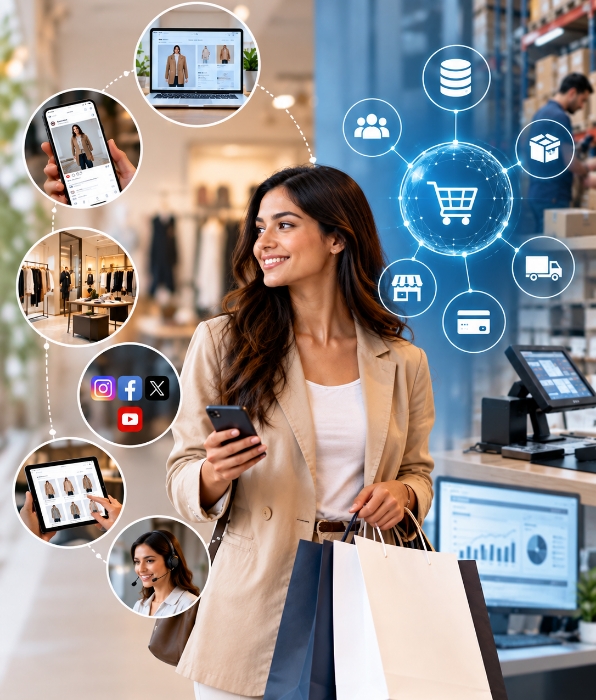
Customers today move between various channels before completing a transaction. They might come across a product via social media channels, then navigate to a website, compare products using their smartphone, and purchase the item via an application or store.
However, presence on multiple channels has become a standard practice for companies, which need to find ways to ensure a seamless integration between these channels and create a consistent experience for customers.
This is where the distinction between omnichannel and unified commerce arises. While both these solutions are built around the idea of integration, the latter is based on a deeper connection of commerce processes, data, and customer engagement through a more holistic approach.
In this blog post, we will talk about the difference between omnichannel and unified commerce, how it works, and why connected commerce makes sense for businesses.

What Is Omnichannel Commerce?
Omnichannel commerce refers to efforts to ensure consistency in the customer experience in various channels.
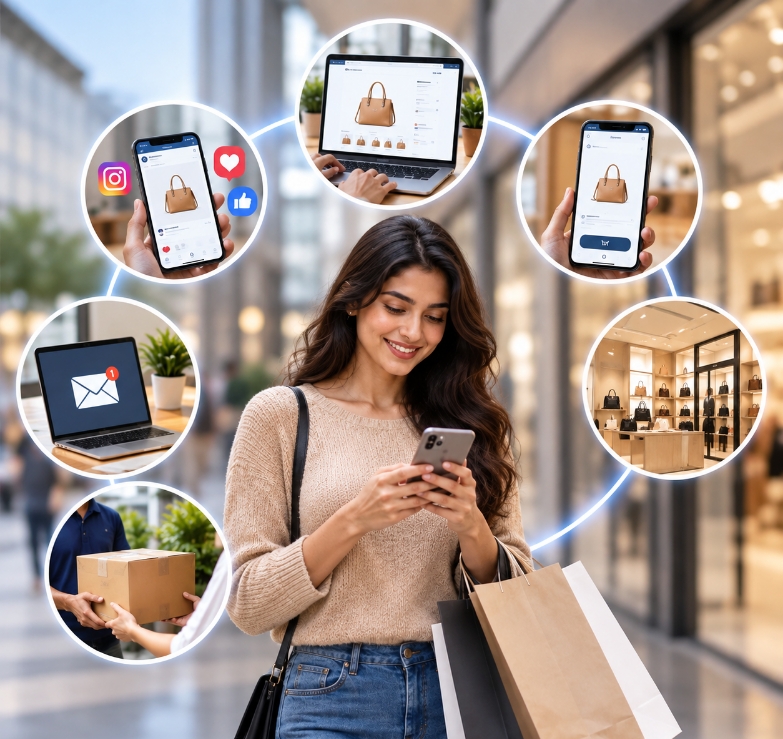
These channels may include websites, mobile apps, social media, marketplaces, email, bricks-and-mortar locations, and other customer touchpoints.
The goal is to ensure that customers can engage with a brand across various channels without experiencing a disjointed experience.
For instance, a customer may find out about a particular product via social media, proceed to the brand's website to get more information, and then go to a physical store to make the purchase.
Omnichannel commerce enables companies to coordinate these channels from the customer's point of view.
However, the underlying systems that support each channel may continue to operate independently from one another.
What Is Unified Commerce?
Unified commerce takes the notion of channel integration even further.
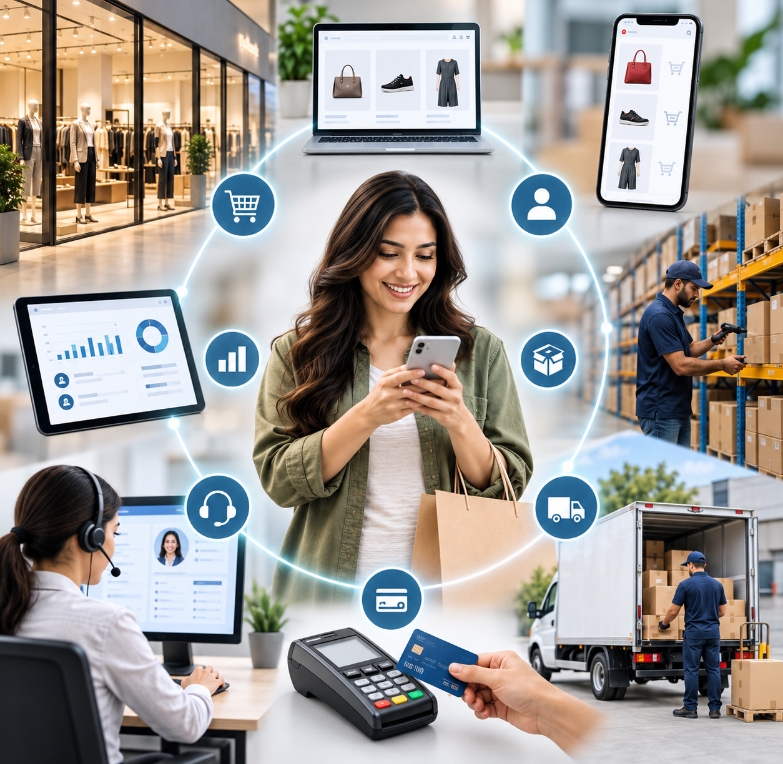
Whereas omnichannel commerce is all about connecting various customer-facing channels, unified commerce strives to integrate various commerce capabilities, customer data and processes in a connected technology ecosystem.
Sales, inventory management, customer data, orders, payments, fulfillment and engagement may be connected, as opposed to managed using various independent systems.
This provides a more comprehensive understanding of the customer and the business itself.
When customers make purchases online, for example, a business would be able to associate their purchase order with inventory, fulfillment process, customer history, and other processes in the business.
The focus would no longer be on how channels would connect but rather on having a more comprehensive connected commerce infrastructure.

Relating Business Dashboards to Growth
It can be explained by posing a simple question.
Omnichannel asks: Are our customer channels connected? Unified commerce asks: Are our channels, data, and commerce operations working from one connected ecosystem?
Omnichannel commerce is more concerned with the customer experience, while the latter focuses on infrastructure, which makes it possible.
This difference becomes especially relevant when businesses start adding multiple channels. A business may have not only a website but also an application, marketplace presence, and physical stores.
With each channel operating independently from others, managing consistent customer information, inventory, and order management may become increasingly difficult.
The Importance of Connected Commerce
Customer expectations are changing alongside the growth of digital and physical commerce. Businesses are expected to deliver appropriate information, consistency, and increased convenience regardless of the point of entry into interaction.
Disconnected systems may lead to issues on the part of businesses with regard to customer service, managing inventory, order visibility, and reporting.
Connected commerce can assist in creating visibility in all these areas.
For instance, the connection of customer, order, and inventory information will let one understand what took place in the commerce process rather than looking at every single interaction in isolation.
Furthermore, connected commerce will allow better decision-making since all business teams will be able to access information from several sources.

Customer Experience vs. Business Operations
The one major difference between omnichannel and unified commerce lies in the area of backend operations.
Omnichannel could certainly provide a good customer experience across different channels. But if there is no connectivity in terms of backend operations, companies could end up with operational inconsistencies even if their customer-facing functions are smooth.
Customers would certainly be looking for an update on the availability of a product or its delivery information. And providing such an experience needs more than simply integrating channels but also requires operational information being shared across various systems.
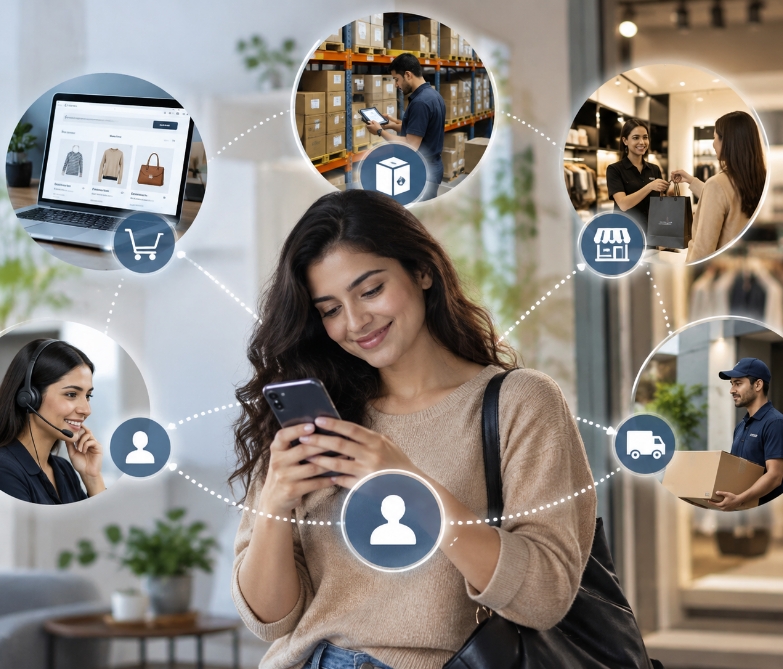
This can include:
- Order management
- Inventory visibility
- Customer information
- Sales tracking
- Delivery and fulfilment
- Business reporting
- Customer engagement
- Performance analytics
Unified commerce takes care of this issue by integrating customer experience with business operations.
Where Does Unified Commerce Come In When It Comes To Business Growth?
Unified commerce is not just a technological decision. It could also shape the way businesses interpret the behavior of their customers.
When activities of customers, sales, and operational data are interconnected, it allows businesses to have a clearer picture of what is going on in their commerce ecosystems.
It helps teams recognize patterns, enhance processes, and make informed decisions through the wider lens of business performance.
In cases where businesses need to manage multiple stakeholders, channels, or locations, this approach becomes even more important.
The approach taken by Doodlezz regarding business commerce is centered around connecting technology, operations, stakeholder management, and business reporting for more visibility in the commerce ecosystem.
The goal is to go beyond managing channels individually to a more interconnected approach to business commerce.


Which Approach Should Businesses Choose?
The omni-channel and unified commerce methodologies are not mutually exclusive. Omni-channel is a vital step toward achieving uniformity of experiences across various customer channels. Meanwhile, unified commerce adds a layer of integration among the supporting systems, processes, and operations behind such experiences.
If a business has relatively straightforward channel management, the omni-channel methodology can serve the purpose well enough to satisfy current customer experience demands.
For more complex businesses that need to manage multiple channels, stakeholders, orders, customer interaction, and operational procedures, unified commerce may be a better fit. The right approach will depend on the specifics of each business situation.
Conclusion
Customers don’t think about single channels anymore; rather, they expect consistency from their interaction across various touch points with a business.
Omnichannel commerce provides the tools to connect touchpoints and deliver better experiences for customers. Unified commerce takes it a step further by connecting not only channels, but also the underlying data and systems that power them.
This distinction is important because the customer experience relies increasingly on back-end operations. Consistent experience in the front end becomes difficult to achieve when back-end remains fragmented.
Business Commerce at Doodlezz enables businesses to connect technology, processes, stakeholders, and reporting, thus creating more connected commerce ecosystems. Want to break out of disconnected channels and into a connected commerce ecosystem? Get in touch with Doodlezz.

Krishna Talreja
Tech - Content writer
Sep 06, 2026
Why Doodlezz?

We are an integrated marketing partner that combines creative strategy with operational delivery, identity, guidelines, packaging, assets, and content built for both digital commerce and offline retail. Unlike boutique creative studios that stop at concepts, Doodlezz takes designs through production, vendor liaison, and campaign ready packaging, reducing launch friction. In the Oman India market, agencies often specialise in either creative or execution; Doodlezz’s end to end model positions it to reduce vendor hand-offs and accelerate time to market. Build a Brand System that Performs