



Introduction
The customer decision journey is becoming increasingly non-linear. An individual may encounter a brand via Facebook, then research it, visit the website, compare options, and wait to hear back.
The more steps, the greater the chances that interest will decline. Brands are therefore seeking ways to reduce customer friction by bringing conversations, information and more tailored follow-ups closer to the customer.
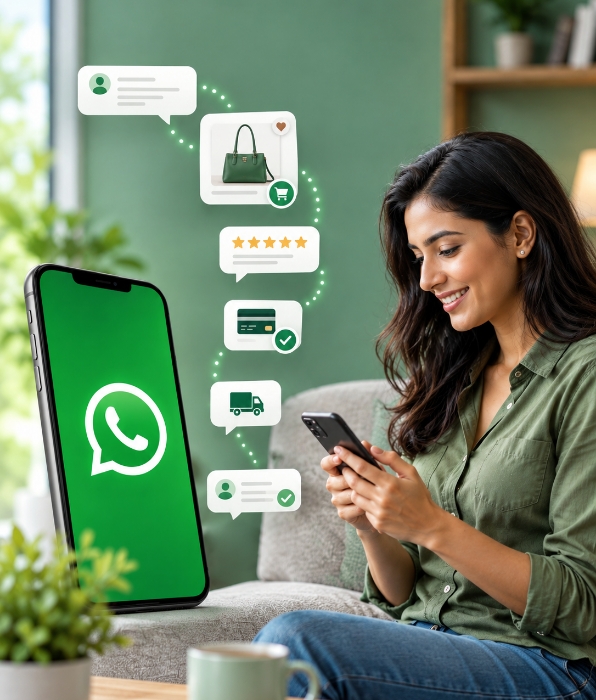
This is where WhatsApp has emerged as one of the tools helping brands bridge this gap. With widespread adoption by over 2 billion active users a day, WhatsApp has become integrated into people's everyday lives, with users relying on it to book services, receive updates and communicate with businesses.
In this blog, we look at how brands are using WhatsApp to make customer decision-making easier and accelerate the path to action.

Why long customer journeys can slow down decisions?
Customers do not always lose interest because they dislike a product or service. In many cases, they experience excessive friction before receiving the information they need. A lead may see an advertisement, visit a website, complete a form, wait to receive an email, and then speak to a salesperson.
Every break in interaction can slow down the decision-making process. WhatsApp helps address some of these gaps by enabling businesses to continue conversations on a platform that customers already use frequently.
Instead of moving customers through multiple channels, companies can use WhatsApp to share product information, updates, reminders and feedback.
There is still no evidence that WhatsApp replaces websites, sales teams or other marketing channels. The benefit lies in integrating these touchpoints and making the transition between interactions more seamless.

Did You Know?
Meta claims that over two billion people use WhatsApp every day, and millions of people
already use the platform to
connect with businesses for everything from booking services to receiving updates and
managing daily needs.
This creates an important opportunity for brands. It is not about asking consumers to learn a new way of communicating. Still, about establishing two-way communication through a channel they are already familiar with in their everyday digital lives.
How are brands using WhatsApp to reduce decision-making time?
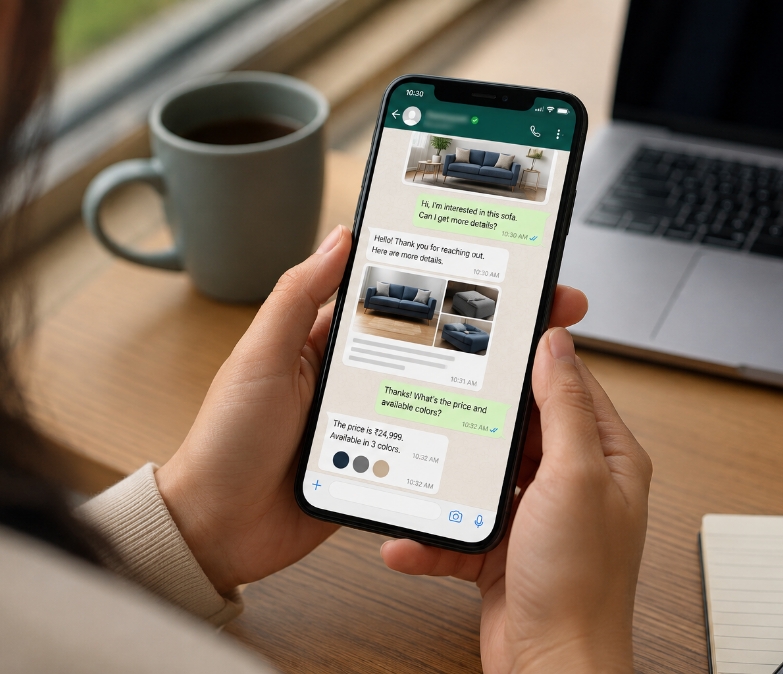
Turning marketing interest into immediate conversations. One of the major challenges in digital marketing is bridging the gap between creating interest and engaging in an active conversation. A customer may click on a social media advertisement or visit a website but then fail to fill out a form or make an enquiry.
Click-to-message campaigns help bridge that gap by giving interested customers a way to send a message immediately.
This can help speed up the journey from awareness to consideration. Companies can use these conversations to respond to questions, provide relevant information, and guide customers towards the next stage.
For brands, it is not about creating more messages. It is about making it more convenient for potential customers to continue their journey while their interest is still active.
Delivering relevant information at the right time
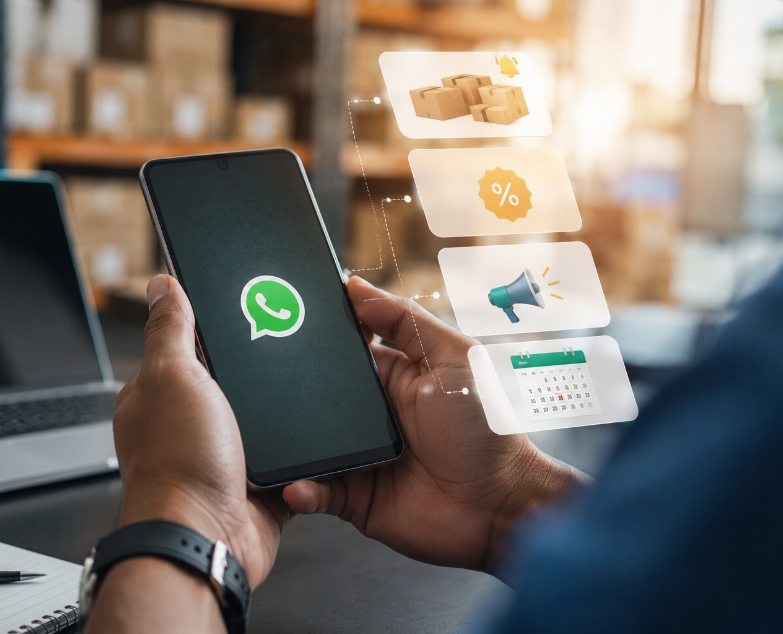
Customers may delay their decision-making because they lack the information required to move forward. WhatsApp can be used to share alerts, offers, reminders, updates, and other relevant information directly with customers.
Such updates can be received directly by customers who have opted in, rather than requiring them to repeatedly search for information across different platforms.
Doodlezz's own DOW WhatsApp Business case study showcases this approach in a B2B context. The campaign aimed to increase dealer engagement by using direct and personalised communication, such as product information and offers. The campaign resulted in an 80.72% delivery rate and an 84.41% open rate.
The key takeaway is that the value of WhatsApp lies not only in its reach, but also in creating communication that is timely and relevant to the recipient.
Supporting effective follow-ups
The decision journey does not always end after the initial interaction. A customer or visitor may be interested in an offer but require more information or reinforcement before taking the next step.
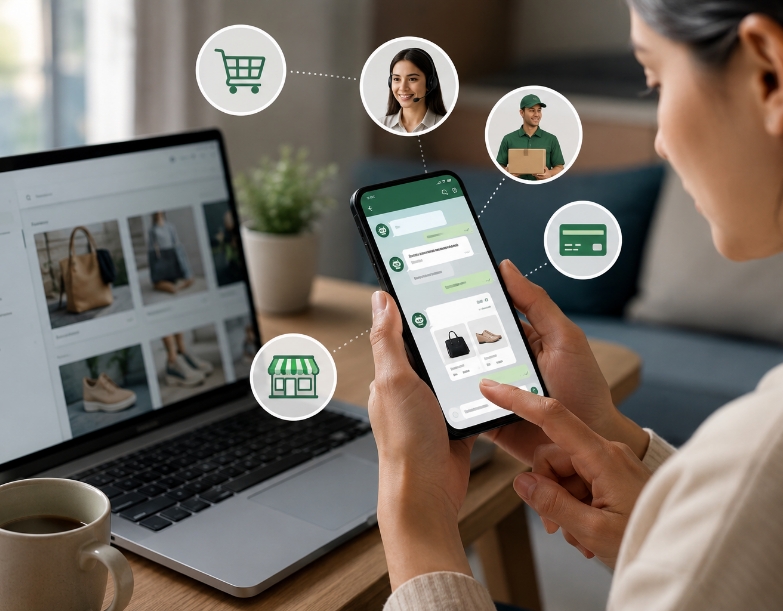
Businesses can continue building that relationship through effective follow-ups. Reminders about an enquiry, product updates, or information related to a previous interaction can help move the conversation forward.
However, faster communication should not turn into excessive communication. Businesses need to adopt permission-based communication and ensure that their messages remain useful and relevant.
Meta has also kept customers in control of their business chats, including the ability to end interactions with a business or provide feedback.
That's why relevance is such an important factor in building an effective WhatsApp marketing strategy.
Connecting WhatsApp with the wider customer journey
WhatsApp functions best as part of an integrated marketing system rather than as a standalone channel.
Such updates can be received directly by customers who have opted in, rather than requiring them to repeatedly search for information across different platforms.
For instance, a customer could initially be reached through a hyperlocal advertisement, engage with a social campaign and then continue the interaction on WhatsApp. The company can then use the platform to deliver targeted information and guide the customer towards a website, store visit or sales conversation.
This connected approach is particularly useful for companies that interact with customers across both digital and physical settings.
Doodlezz's Hyperlocal Marketing services already combine WhatsApp and SMS messaging with geofencing, Google, social media, RailTel WiFi advertising and DOOH to support local audience engagement and measurable action.
When these channels work together, WhatsApp can act as a bridge between marketing attention and the next business action.
Building a strong WhatsApp customer journey
Simply pushing promotional content through WhatsApp will not be enough. Businesses need to understand where each customer interaction fits within the overall customer journey.
A strong approach should focus on:
- Reaching customers through permission-based communication
- Offering information appropriate to their stage in the decision-making process
- Responding quickly to customer interest and enquiries
- Implementing structured follow-ups without overwhelming customers
- Connecting WhatsApp campaigns with websites, sales teams and other marketing channels
- Measuring engagement and business results to inform future campaigns
With the development of more business features and advertising options on the platform, integration with the wider marketing ecosystem will become an increasingly important consideration.
Meta has already revealed tools that enable businesses to run certain campaigns across WhatsApp, Facebook and Instagram through centralised workflows.
Conclusion
Customers' purchasing decisions rarely happen all at once. They develop through discovery, research, conversations, follow-ups, and the information that helps customers move along the decision-making journey.
WhatsApp can help shorten this journey by closing communication gaps and providing faster, two-way, and targeted interactions. When used as part of a strategic approach, it connects marketing efforts with everyday customer conversations, bringing prospects closer to taking action.
However, the greatest potential for growth lies in integration. WhatsApp works best when connected with the channels that generate awareness and the systems that enable conversion.
Doodlezz focuses on helping organisations implement WhatsApp Marketing as part of a broader digital, GTM and Hyperlocal Marketing strategy. Whether it is developing relevant messaging, managing campaign execution, or using WhatsApp to complement local campaigns, digital advertising, and customer engagement initiatives, the focus is on making every interaction connected, engaging, and meaningful.
Want to speed up and streamline your customer journey? Partner with Doodlezz to develop a WhatsApp Marketing strategy that translates customer engagement into tangible business results.

Seema S
Client Servicing Manager
Jul 27, 2026
Why Doodlezz?

We are an integrated marketing partner that combines creative strategy with operational delivery, identity, guidelines, packaging, assets, and content built for both digital commerce and offline retail. Unlike boutique creative studios that stop at concepts, Doodlezz takes designs through production, vendor liaison, and campaign ready packaging, reducing launch friction. In the Oman India market, agencies often specialise in either creative or execution; Doodlezz’s end to end model positions it to reduce vendor hand-offs and accelerate time to market. Build a Brand System that Performs